


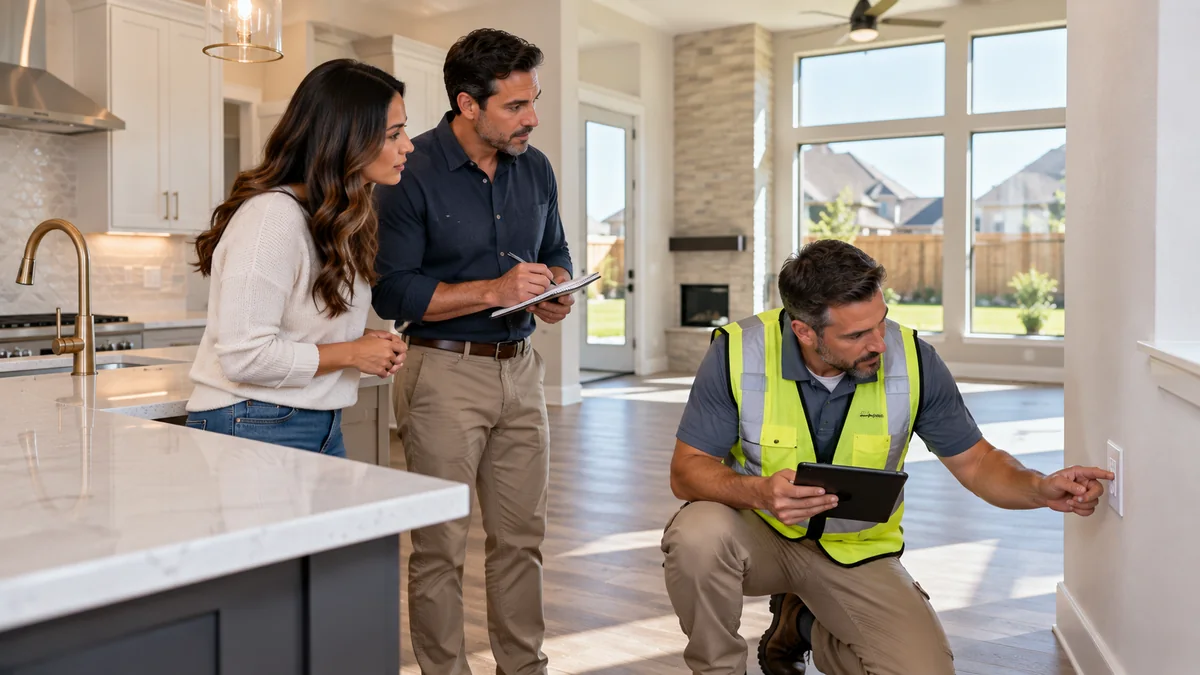
The house is nearly complete, the countertops are installed, the lights turn on, and closing is approaching. That is exactly when buyers can be tempted to assume the hard part is over. A new construction final inspection in Sugar Land provides an independent review of the completed home before move-in, when many builder corrections can still be discussed as part of the final punch-list process.
A new home is not the same as a defect-free home. Construction involves dozens of trades, materials, deliveries, change orders, and finishing steps. The final inspection is designed to evaluate the home as a completed system and document visible deficiencies or performance concerns before the buyer takes possession.
GBG Inspection identifies the final inspection as Phase 3 of its new construction phase inspection services, following pre-pour foundation and pre-drywall inspections.
Final Inspection vs. Builder Walkthrough: They Are Not the Same
A builder walkthrough—often called an orientation, homeowner demonstration, or punch-list walkthrough—typically focuses on explaining the home, reviewing finishes, demonstrating systems, and identifying visible items the builder agrees to address. A professional inspection has a different purpose: independently evaluating the home’s accessible systems and components and reporting observed deficiencies.
Builder Walkthrough | Independent Final Inspection |
Usually led by builder or superintendent | Performed for the buyer by an independent inspector |
Explains features, finishes and homeowner responsibilities | Evaluates accessible systems and components for visible deficiencies |
Often creates or updates a cosmetic punch list | Produces a written inspection report with documented findings |
May focus on completion and homeowner orientation | Can identify safety, performance, installation and workmanship concerns |
When to Schedule the Final New Construction Inspection
The home should be substantially complete: utilities on, major systems installed, appliances in place when included, plumbing operational, electrical service active, HVAC available for testing when conditions allow, and most construction debris removed. At the same time, the inspection should occur early enough that the builder still has a realistic opportunity to review and correct documented items before closing or possession.
Ask the builder for the expected completion and walkthrough dates, then coordinate the inspection so the report is available before the final punch-list conversation whenever possible.
What a Final New Construction Inspection Commonly Checks
Structure and Exterior
Visible foundation and structural indicators.
Exterior wall coverings, trim, flashing and penetrations that are accessible.
Roof-covering observations from accessible vantage points, subject to inspection limitations.
Doors, windows, grading, drainage observations and visible exterior workmanship concerns.
Electrical Systems
Service equipment and accessible electrical panels.
Representative receptacles, switches and fixtures.
Required protective devices and visible electrical safety concerns within the inspection scope.
Operation of accessible installed electrical components using normal controls.
Plumbing Systems
Water flow and drainage at accessible fixtures.
Visible leaks and fixture installation concerns.
Water-heating equipment and accessible safety components.
Visible supply, drain and gas-distribution components within the inspector’s scope.
HVAC and Ventilation
Heating and cooling operation when weather and equipment conditions permit safe testing.
Thermostats, accessible equipment, filters, registers and return-air locations.
Visible duct or installation deficiencies that can be observed at the final stage.
Bathroom, kitchen and other installed ventilation components where applicable.
Interior, Built-In Appliances, Doors and Windows
Operation of representative doors and windows.
Visible interior finish conditions that may indicate installation or performance issues.
Built-in appliances included within the inspection scope.
Stairs, railings, guards and other accessible safety-related components.
Why an Inspection Report Matters Before Closing
A verbal walkthrough is easy to forget. A written report creates a record. Photographs help identify the exact location of a concern, clear explanations help the buyer understand why it was reported, and a summary helps separate significant findings from routine observations.
GBG’s sample reports describe a reporting format that includes a summary of findings, photo documentation, clear explanations, and actionable recommendations. That structure can make communication with a builder much more precise.
How to Turn the Report Into a Builder Punch List
Review the report promptly. Do not wait until the night before closing. Read the full report and flag the items you want clarified.
Separate categories of concern. Safety, water intrusion, electrical, plumbing, HVAC, structural, operational and finish issues may require different trades or response timelines.
Use photos and locations. Specific documentation is more useful than a general statement such as “fix the electrical.”
Ask the builder how corrections will be documented. Some items may be completed before closing, while others may be placed on a written completion list depending on the builder and transaction.
Verify important repairs. For significant corrections, ask whether documentation, re-inspection, or specialist confirmation is appropriate.
New Construction Does Not Eliminate Inspection Risk
A newly built home can still have incomplete work, loose connections, damaged components, drainage concerns, missing protection, misadjusted doors, plumbing leaks, HVAC issues, electrical deficiencies, or workmanship items that were simply overlooked during a fast construction schedule.
The purpose of an independent inspection is not to predict future failures or guarantee that every defect will be found. It is to provide a professional snapshot of visible and accessible conditions on the inspection date so the buyer can ask better questions before closing.
Where Texas Inspection Standards Fit In
Texas real estate inspectors performing a standard inspection of a substantially completed one-to-four-family dwelling are subject to minimum Standards of Practice established by the Texas Real Estate Commission. Those standards cover major areas such as structural systems, electrical, HVAC, plumbing and certain appliances while also defining important limitations of an inspection.
That is one reason buyers should read the inspection agreement and report instead of assuming an inspection is a code-compliance audit, engineering study, environmental test, or guarantee. Specialized concerns may require evaluation by the appropriate licensed trade or professional.
Should You Attend the Final Inspection?
If the inspector permits client attendance and the site is safe, being present near the end of the inspection can be useful. It gives the buyer an opportunity to see important findings in context and ask questions about the report. However, the inspector still needs uninterrupted time to work methodically through the home.
What If You Already Had a Pre-Drywall Inspection?
The final inspection is still valuable. The two phases answer different questions. Pre-drywall focuses on systems while they are exposed; final inspection focuses on the completed home and how installed systems and components perform near move-in.
When the same inspection company follows the project through multiple phases, prior observations can also provide useful context—but each inspection still reflects the conditions visible on that specific date.
A Better Closing Week Starts With Better Information
Closing week already contains enough deadlines. The inspection should reduce uncertainty, not add to it. Schedule early enough to receive and understand the report, communicate clearly with the builder, and decide whether any finding needs additional specialist review.
GBG Inspection is based in Sugar Land and specializes in new-construction phase inspections. Review the company’s inspection approach or contact GBG Inspection to coordinate the final inspection with your builder’s completion schedule.
Frequently Asked Questions
Do I need a final inspection if my new home passed municipal inspections?
Municipal inspections and an independent home inspection serve different purposes. Municipal inspections focus on the jurisdiction’s requirements at specific construction stages. An independent inspection is performed for the buyer and documents visible conditions and system performance within the agreed inspection scope.
How long before closing should I schedule a new construction final inspection?
Schedule it after the house is substantially complete but with enough time for the report to be reviewed before the builder walkthrough or closing. The exact timing depends on the builder’s completion schedule, so confirm the date as soon as utilities and major systems are ready for testing.
Will a final inspection catch cosmetic defects too?
Inspectors may document visible workmanship or finish concerns, but the inspection is not a cosmetic quality-control checklist for every paint mark, cabinet alignment issue, or finish preference. Buyers should still perform their own builder walkthrough and create a separate cosmetic punch list.